
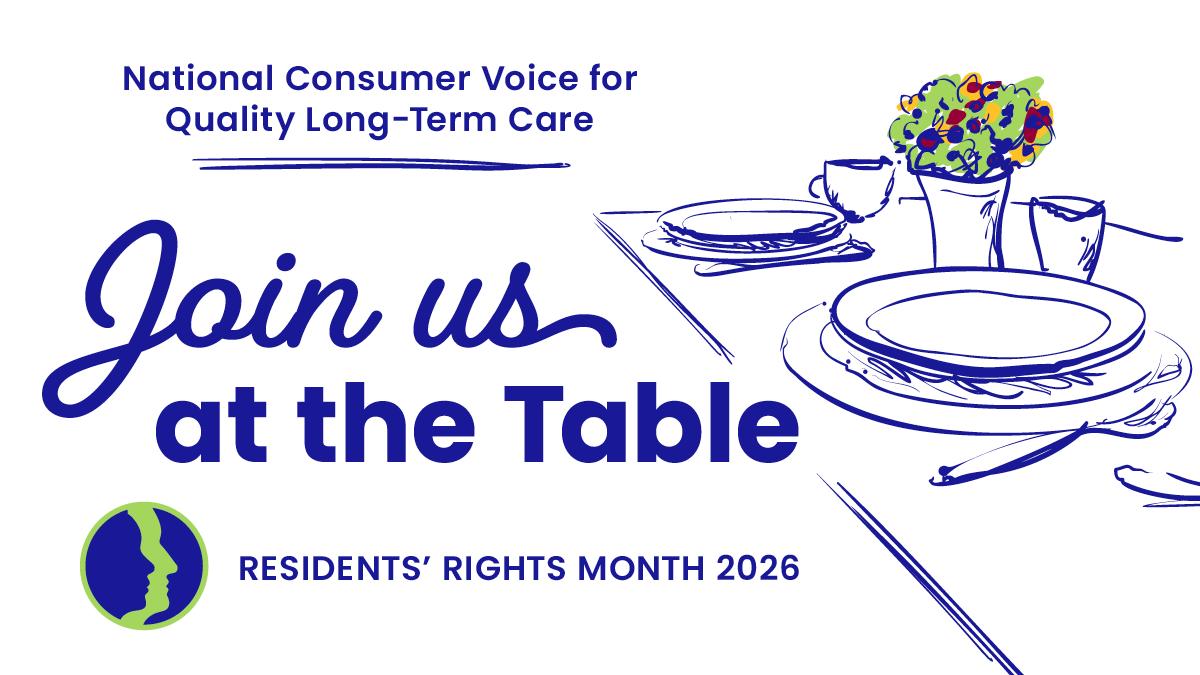
October marks another Residents’ Rights Month and this year, the focus is food. But not just simple meals. Instead, Consumer Voice has chosen this topic to touch on a few pain points in long-term care facilities while also shining a light on the importance of food in our daily lives.
Food is a defining characteristic for most cultures. A dining table is a place for people to gather, make memories, enjoy good conversations, reconnect, talk through problems, celebrate victories, and, most importantly, enjoy nourishing food.
Over the years, long-term care facilities and nursing homes have, unfortunately, carried the unwelcome stereotype of having bad food. And as we age, our appetites won’t be what they used to be, and food can become harder to eat and have less appeal. But that doesn’t make it any less important.
Instead, Consumer Voice is arguing that food, and all it represents, is a vital part of our lives in and out of care facilities. This Residents’ Rights Month is celebrating food and its cultural importance, as well as raising awareness of malnutrition and a resident’s right to nourishing meals.
Residents’ Rights Month
Residents’ Rights Month is a reminder that entering a nursing home or assisted living facility does not mean giving up your dignity, independence, or voice. In my practice, I unfortunately see what happens when residents are treated as a room number or a task on a chart instead of as a person.
Residents still have the right to make decisions about their lives, participate in their care, raise concerns without fear of retaliation, and be treated with dignity and respect. Residents’ Rights Month is an opportunity to make sure residents and their families actually know those rights.
Why Food Awareness is Necessary
This year’s theme is not an accident. There are plenty of cases where meals are the foundation of abuse and neglect.
The truth is, mistakes happen. One incorrect tray or late meal is very different from a pattern of failing to provide adequate nutrition, hydration, or assistance with eating.
We see problems when residents who cannot feed themselves are left alone with their meals, trays are placed out of reach, dietary restrictions are ignored, or significant weight loss and dehydration occur without anyone meaningfully addressing why.
What Families Should Look For
Families should watch for unexplained weight loss, dehydration, weakness, untouched meals, food being left out of reach, or a loved one repeatedly saying they are not getting help eating or drinking.
And very often, the underlying issue is staffing. A care plan can say a resident needs assistance with every meal, but if there aren’t enough caregivers to provide that assistance, the care plan is just a piece of paper.
Recording Violation and Issues
When it comes to your rights and health, there is no problem too small or too big to note and report. Put concerns in writing whenever possible. Emails and messages create a record showing exactly what the facility was told and when.
Families should also keep a simple journal with dates, times, photographs when appropriate, the names of staff members they spoke with, and what they were told would be done. If the problem involves weight loss or nutrition, track the resident’s weight and what they are actually eating.
Documentation becomes especially important when the same problem continues after the facility has already been warned about it.
Self-Determination and Your Rights in Practice
Self-determination means residents still have the right to make choices about their own lives. They don’t lose that simply because they need help or live in a facility.
That includes everyday decisions, from when they wake up to what they wear, to what activities they participate in, and how they spend their day. But it also includes important healthcare decisions and the right to participate in their own care.
One area that particularly concerns me is when medications or restraints are used for the convenience of the facility. We have seen situations where powerful medications were used to make residents easier to manage instead of addressing why they were confused, distressed, wandering, or exhibiting certain behaviors.
The basic principle is simple: whenever reasonably possible, the facility should adapt the care to the resident, not force the resident to adapt to what is easiest for the facility.
That, to me, is what Residents’ Rights Month is ultimately about: making sure people understand that needing long-term care does not mean surrendering your dignity, your choices, or your rights.
How to Participate in Residents’ Rights Month
The most important part of participation is visiting your loved ones living long-term care, speaking up when you see something, and knowing your rights. In addition, during the month of October, Consumer Voice offers promotional materials that can be used to raise awareness on social media. This year, you can submit recipes that are meaningful to you and your family.
Read More Than A Meal to discover why food matters.
If you or a loved one have been the victim of nursing home abuse or neglect, call Gharibian Law (866-624-7313) for a FREE consultation and the best legal representation.

This is an attorney advertisement in compliance with the Rules of Professional Conduct. All Gharibian Law posts on Substack are intended to provide general information. This website and its content are not intended to create an attorney-client relationship. Any testimonial or endorsement on this website does not constitute a guarantee, warranty, or prediction regarding the outcome of your legal matter.